

Can You Get in Trouble for Prank Calling? Laws, Penalties, and Legal Consequences
A harmless joke call does not automatically mean you have broken the law. However, can you get in trouble for prank calling? Yes. Depending on your behavior, intentions, and the circumstances, prank calling can lead to legal consequences, particularly when it involves repeated unwanted calls, harassment, threats, false emergency reports, or fraudulent caller ID spoofing.
In the United States, both federal and state laws may apply to certain telephone communications.
A single lighthearted joke is generally different from repeatedly disturbing someone, threatening a person, or making a false emergency report.
Understanding that distinction can help callers avoid legal trouble and help recipients recognize when they should report unwanted calls.
Can You Get in Trouble for Prank Calling?
Yes, but not every prank call is illegal. A one-time joke between friends, without threats, fraud, or significant disruption, is unlikely to result in criminal charges by itself.
The situation changes when someone uses phone calls to frighten, intimidate, deceive, or repeatedly disturb another person.
The caller’s intentions and the effect of the conduct can matter when authorities evaluate a complaint.
For example:
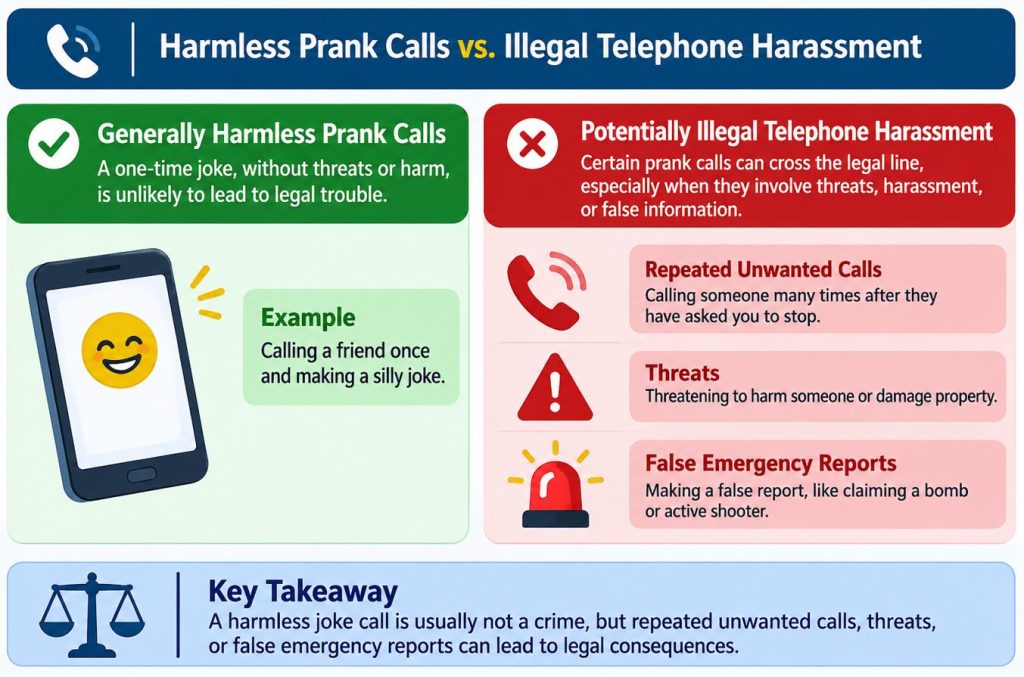
- Generally harmless: Calling a friend once and making an obviously silly joke.
- Potentially unlawful: Calling someone repeatedly after they have asked you to stop.
- Serious misconduct: Threatening someone or falsely reporting an emergency to trigger a police response.
The important distinction is that a joke does not automatically excuse conduct that violates telephone harassment or other criminal laws.
Is Prank Calling Illegal in the United States?
There are no laws that prohibit all prank calls at the federal level. Other laws govern telephone misconduct in a different way at the state and federal levels.
The federal government can get involved if there is harassment, fraud or unlawful communications in an interstate telephone call.
Some states have laws that make it illegal to harass, intimidate, threaten or stalk with phone calls. False emergency calls are also illegal in some states.
The same call that is a prank call in one state may be a harassing or threatening call in another state. It depends on the law of the state where the call was made and the state where the call was received.
When Does a Prank Call Become Illegal?
A prank call becomes illegal when it contains harassment, threats, deceit or other activities that create a risk to someone.
1. Harassing Phone Calls
Telephone harassment occurs when someone calls you repeatedly, even after you have told them to stop. It can also happen when a caller makes repeated phone calls to disturb you. This can be considered illegal harassment.
2. Intimidation and Harassment
Federal law and several state laws cover telephone harassment and intimidation. This is often a civil issue.
Hypothetical Example: Neighbor A calls Neighbor B, makes inappropriate/off-putting comments, and won’t stop calling, despite the requests to not call anymore. Neighbor A’s actions may be considered harassment, depending on the law in that area.
3. Threatening Communications
People aren’t allowed to joke about threatening to hurt people and damage property. Jokes are meant to be non-threatening. Threatening someone is unlawful and considered a crime.
4. False Emergency Reports and Swatting
Swatting is making a false emergency report to get law enforcement to respond to an incident that did not occur. Swatting can get the law-enforcement involved to unnecessarily respond to a dangerous situation.
Swatting is a crime. The FBI has a Swatting page on their website that explains Swatting and the dangers it has on the community and law enforcement.
5. Caller ID Spoofing and Fraudulent Impersonation
Spoofing is when someone fraudulently changes their Caller ID.
Spoofing isn’t always illegal, but, under the Truth in Caller ID Act, it is illegal to make a call and transmit misleading information with the intent to defraud and to attain something of value.
For instance, making a call and pretending to be from a bank in order to obtain someone’s financial information can land you in a lot of legal trouble.
What Federal Laws Apply to Prank Calling?
Several federal laws may apply to particular types of prank calls. However, their requirements are specific, and none makes every ordinary joke call a federal crime.
| Federal law | What it covers |
| 47 U.S.C. § 223 | Certain obscene or harassing telephone communications |
| 47 U.S.C. § 227 | Certain automated calls and prerecorded messages |
| 47 U.S.C. § 227(e) | Fraudulent caller ID spoofing |
| 18 U.S.C. § 1038 | Certain false information and serious hoaxes |
Can You Get Arrested for Prank Calling Someone?
An arrest can happen for a prank call if it involves a crime. However, a prank call by itself doesn’t give the police the right to make an arrest.
The police may investigate if they receive a complaint and there are threatening, harassing, or repeated unwanted calls, or fake emergency calls.
The possible outcomes include:
- Misdemeanor Charges: Some lesser harassment or telephone-related offenses.
- Felony: Other, more serious offenses, including qualifying threats or other serious hoaxes.
- Fines: Depending on the situation and the applicable law.
An investigation doesn’t mean charges will be filed and charges don’t mean there will be a conviction. The prosecution has to prove the required elements of the offense.
Can you Get into Legal Trouble for Prank Calling Businesses?
Yes, but making a simple prank call to a store or restaurant generally will not result in legal issues.
People getting into trouble is more likely to occur when prank calls consist of repeated order attempts, or order attempts of an excessive nature, particularly if orders are placed during a busy time for the restaurant.
Potentially problematic behavior includes:
- Repeated fraudulent orders placed to fast food restaurants, especially if orders result in food and employee time being wasted.
- Repeated prank calls made to local restaurants to prevent staff from answering customer orders.
- Threatening or harassing employees of a retail store or making attempts to obtain store merchandise under false pretenses.
- Continuously harassing the customer service department of businesses and making abusive calls.
A business can legally document and report behaviors that are threatening or disruptive to staff. Depending on the behaviors, state and/or federal laws can apply for harassment, threats, and/or fraud.
What Happens If Someone Reports Your Prank Call?
Reporting a prank call does not automatically result in an arrest or conviction. What happens next depends on the seriousness of the complaint and the available evidence.
A typical process may include:
- Complaint: The recipient contacts the business, telephone provider, or police.
- Initial review: Authorities assess whether the reported conduct may violate a law.
- Evidence collection: Investigators may review call logs, voicemails, recordings, witness statements, and other available records.
- Investigation: Authorities may seek additional information to identify the caller.
- Possible legal action: If sufficient evidence supports an alleged offense, authorities may pursue charges.
What Should You Do If You Receive Harassing Prank Calls?
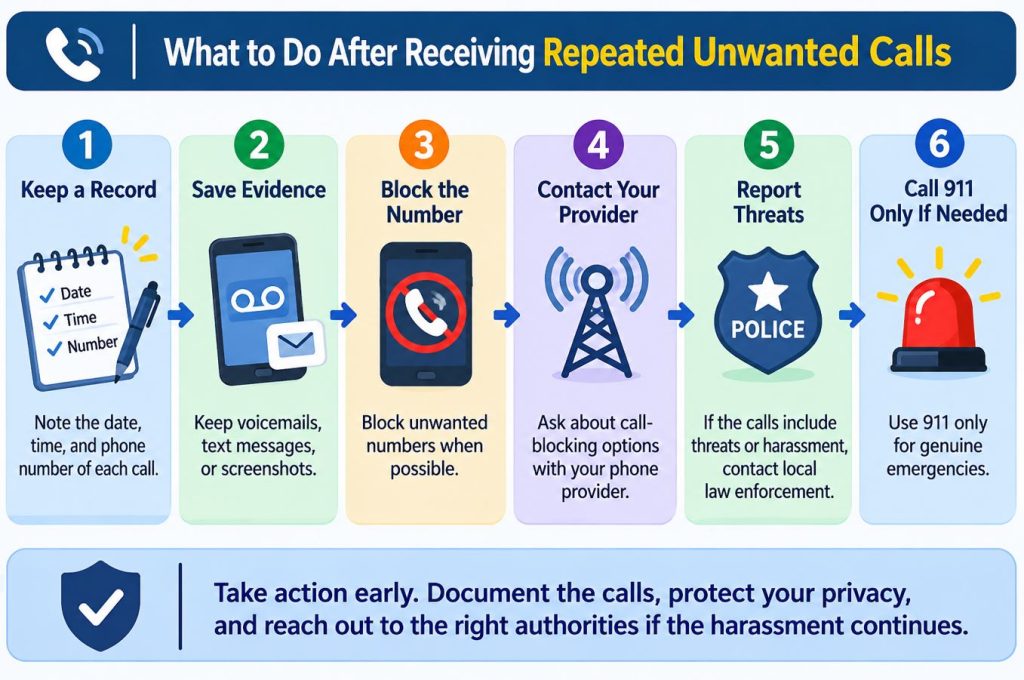
If someone repeatedly calls you with unwanted jokes, abusive comments, or threats, take practical steps to protect yourself.
- Keep a record of incoming calls, including dates and times.
- Save voicemails, text messages, and other relevant evidence.
- Document repeated incidents and any threats.
- Block unwanted numbers when appropriate.
- Contact your telephone provider about available call-blocking options.
- Contact local law enforcement if the calls involve threats or persistent harassment.
- Call 911 only when there is a genuine emergency requiring immediate assistance.
How to Avoid Legal Trouble When Making Phone Calls
If you enjoy making jokes over the phone, follow a few basic precautions:
- Keep jokes friendly and avoid frightening or humiliating people.
- Do not repeatedly call someone who has asked you to stop.
- Never make threats, even as a joke.
- Do not make fake emergency reports or bomb threats.
- Avoid impersonating banks, government officials, police officers, or other organizations to deceive people.
- Do not use caller ID spoofing to commit fraud or harm someone.
- Respect businesses’ time and avoid disrupting their operations.
The simplest rule is to stop calling when someone does not want to participate.
Frequently Asked Questions About Prank Calling
Can you get arrested for prank calling?
You certainly can. For your actions to be criminal, they must violate some type of law. This includes things like telephone harassment, threating communications, or making false emergency reports. Just because you’ve made a prank call doesn’t mean you’ll necessarily get arrested.
Can one prank call get you in trouble?
It depends on what you say. One single threatening, harassing, or fraudulent communication can land you in a ton of legal trouble.
Is prank calling illegal if it is just a joke?
Just because you say it’s a joke doesn’t mean you’re legally justified.
Can someone report you for prank calling?
Post your answer here.
Yes. Victims of harassing or threatening phone calls may also contact law enforcement or their telephone service provider. It is determined on a case by case basis whether law enforcement becomes involved.
Can police trace prank calls?
In some cases, yes. There are a number of techniques that help investigators determine the identity of a caller. One of them is reviewing telephone service provider logs and other records. Anonymous call blocking does not guarantee a prank caller’s privacy.
Can you get in trouble for prank calling a restaurant?
Yes. For prank calls that result in disruption or serious annoyance to a business. A single practical joke call is typically not illegal.
Can teenagers get in trouble for prank calling?
Yes. Rules and consequences for teenagers would vary based on applicable state law and the individual seriousness of the situation. It’s possible teenagers could face parental involvement or school discipline.
Conclusion
So, can you get in trouble for prank calling? Yes, but not every prank call is illegal. A harmless joke between friends generally does not create the same legal concerns as repeated unwanted calls, telephone harassment, threats, fraudulent impersonation, or false emergency reports.
Federal and state laws address different types of telephone misconduct, and the potential penalties depend on the specific offense and circumstances.
Legal disclaimer: This article provides general legal information for U.S. readers, not individualized legal advice. Federal, state, and local laws differ, and the outcome of a particular situation depends on its facts. Consult a qualified attorney in your jurisdiction if you need advice about a specific legal matter.
Featured image: magnific.com
