


How to Choose the Right Lawyer Online: A Complete Guide
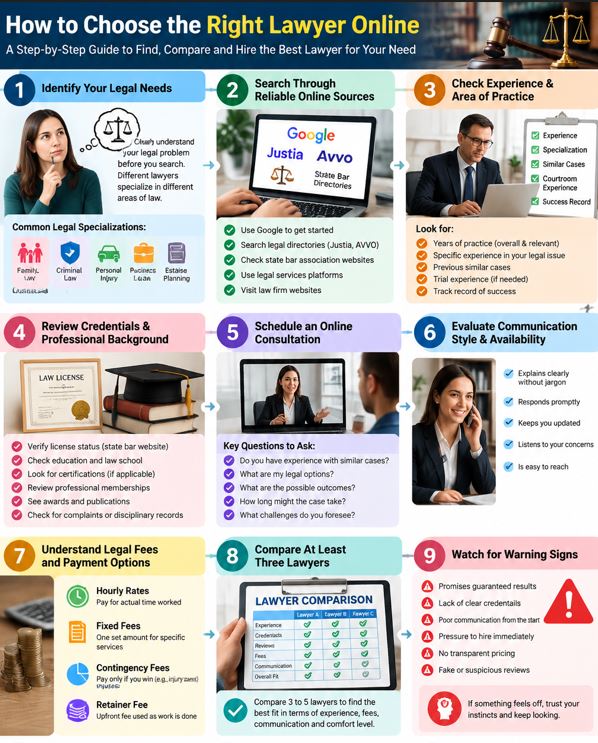
To choose the right lawyer online, start by identifying your specific legal need, then search verified sources like bar association directories and legal platforms such as Justia or AVVO.
Check experience, read detailed client reviews, verify credentials through official state bar websites, schedule a consultation, and compare at least three attorneys before hiring.
Legal issues never happen at a good time. Whether its a fight over who gets to see the kids a business deal that went wrong or an accident that wasn’t your fault the pressure of the situation can make every choice feel harder than it should.
One of the most important choices you’ll make is who to trust with your case.
The result of an issue often depends less on the rules of the law and more on the lawyer who is working for you. A good experienced lawyer can make a difference between getting a good deal and ending up in a long expensive fight.
These days most people look for a lawyer online. It is quicker easier. Gives more choices than using a phone book ever could.
There is a downside to this convenience: not every lawyer that appears in a Google search or is at the top of a paid list is the right person for your case.
This guide explains how to look up compare and choose the best lawyer online one step, at a time so you can move forward with confidence instead of uncertainty.
Why Should You Identify Your Legal Needs Before Searching for a Online Lawyer in USA?
Before you type a single word into Google, take a moment to define your legal problem clearly. This sounds obvious, but it’s the step most people skip, and skipping it often leads to hiring the wrong attorney.
Law is a broad field, and most attorneys focus their practice on one or two specific areas. A lawyer who handles real estate closings all day isn’t necessarily equipped to defend you in a criminal case, even if they’re technically licensed to do so.
Here are some common legal specializations you’ll encounter when searching for an online lawyer:
- Family lawyer: Divorce, child custody, child support, and adoption cases
- Criminal defense lawyer: DUI charges, misdemeanors, felonies, and arrests
- Personal injury lawyer: Car accidents, slip-and-falls, and medical malpractice claims
- Business lawyer: Contracts, business formation, and commercial disputes
- Estate planning lawyer: Wills, trusts, probate, and guardianship matters
How Do You Search for USA Lawyers Through Reliable Online Sources?
After you’ve determined the types of experience and qualifications you require it’s time to start your search.
Here are some legitimate ways to search for the perfect lawyer online:
Google search: easy way to get started, but not the end point.
Legal Directories: Sites like Justia, and AVVO allow you to search for attorneys based on practice areas and location.Often these sites provide reviews and ratings of the attorneys and links to the attorneys’ profiles.
Bar Association Websites: there are lawyers’ and licensing verification directories on many of these sites.
Legal Services Platforms: These are various services that allow you to be put in touch with attorneys suitable to your individual needs.
Law Firm Websites: Visiting a firm’s website can also be a good way to understand who they are, their previous cases, and their practice areas.One mistake people often make is picking a lawyer just because they appear in paid ads or show up high in search results.
Search rankings and ad placements are usually about marketing money, not ability.Just because a lawyer has a lot of money to market, does not mean they are a great lawyer.
How Do You Check a Lawyer’s Experience and Area of Practice?
Experience matters, but not all experience is equal. When evaluating attorney experience and qualifications, look closely at:
- Years practicing law overall
- Specific legal specialization relevant to your case
- Previous case experience with situations similar to yours
- Courtroom experience, if your case may go to trial
- A track record of handling similar cases successfully
These questions reveal the difference between general experience and relevant experience.
A lawyer with 20 years in practice isn’t automatically the best choice if those two decades were spent almost exclusively on corporate contracts and you need help with a child custody dispute.
Relevant, focused experience in your specific legal issue typically matters more than overall years in practice.
What Should You Review in a Lawyer’s Credentials and Professional Background?
Credentials are the lawyer of trust before you talk to an attorney. Before you contact an attorney check the following:
- License Status: Make sure the attorney is licensed and in standing in your state.
- Education: Find out where the attorney went to law school and when the attorney graduated.
- Certifications: Look for board certifications that show the attorney is qualified in areas of law if that matters.
- Professional memberships: Verify that the attorney is a member of state or national bar associations and other legal groups.
- Awards and Recognitions: Awards can show that other professionals respect the attorney. They should not be the only reason to choose the attorney.
- Publications: Read articles, blog posts or books written by the attorney to see the attorney’s expertise.
- History: Check if the attorney has any complaints or sanctions from the state bar.
Doing these checks takes a few minutes but it can help you avoid a costly mistake. An attorney with a record, proper certifications and active participation, in the legal community is far more likely to give you reliable and trustworthy representation.
Why Should You Schedule an Online Lawyer Consultation Before Hiring?
Most lawyers provide an initial consultation service, and nowadays it is very convenient to receive free consultation from the lawyer via the online lawyers consultation through the video call or phone.
These are the questions you should ask during the meeting:
- “Do you have any experience dealing with similar cases and what were the results?”
- “What are the possible legal actions in my situation?”
- “What can be the probable results of this case?”
- “How much time do you think it will take?”
- “What difficulties do you foresee in the process?”
However, you should pay attention not only to the answers but to the communication style of your future lawyer as well. Are they listening to you attentively or seem to be in hurry? Do they try to explain everything clearly, or on the contrary, confuse you with their legal terms?
How Do You Evaluate a Lawyer’s Communication Style and Availability?
Legal cases can stretch on for months, sometimes longer, and communication plays a huge role in how stressful that process feels. A good online lawyer should:
- Explain legal issues clearly, without unnecessary jargon
- Respond to calls and emails within a reasonable time frame
- Keep you updated on case developments as they happen
- Listen carefully to your concerns and questions
How Do Legal Fees and Payment Options Work?
When looking for an affordable online lawyer, the cost issue becomes quite important for most people. However, it doesn’t mean that price should become the only criterion. Knowing different fee arrangements will help you to properly compare potential lawyers:
- Hourly Rates: you will have to pay only for the real time worked.
- Fixed Fees: an amount you have to pay for certain services rendered. It can be useful in uncontested divorces or will drafting.
- Contingency Fees: the lawyer is paid only if you win the case and takes a share of settlement. Quite typical for personal injury cases.
- Retainer Fee: an upfront fee from which the lawyer takes payments when working on your case.
In some cases, the least expensive lawyer won’t be the best solution for your problem. Sometimes a low cost means low experience, a lot of other clients and fewer resources devoted to your case. Before you hire someone, it is necessary to clearly know what services include the stated price and to ask:
“What is going to be my total cost?”
“Are there any additional costs I should know about?”
What Are the Warning Signs When Hiring a Lawyer Online?
Not every online lawyer listing is trustworthy. Watch for these red flags:
- Guaranteed results: No ethical attorney can promise a specific outcome. Legal cases involve too many variables for guarantees to be honest.
- Lack of clear credentials: If you can’t verify where they went to school or whether they’re licensed, move on.
- Poor communication from the start: If they’re slow or dismissive before you’ve even hired them, expect the same (or worse) afterward.
- Pressure to hire immediately: Legitimate attorneys understand that choosing legal representation is a big decision and won’t rush you.
- No transparent pricing: Be cautious of lawyers who dodge direct questions about cost.
- Fake or suspicious reviews: Watch for reviews that sound generic, overly repetitive, or oddly timed in large batches.
Trust your instincts here. If something feels off during your research or consultation, it’s worth exploring other options before signing an agreement.
What Are the Benefits of Choosing the Right online Lawyer?
Finding an attorney via the Internet, provided you do it right, has its benefits over conventional ways of doing so:
- Convenience in Time Usage: No calling around or waiting for a recommendation from friends and relatives.
- More Choices: There are no restrictions on where to look and whom to choose.
- Easier to Compare: Reviews, qualifications, and payment schemes may all be found in one place.
- Online Meetings: Talk to your attorney-to-be without missing a day at work or making a trip.
- Better Knowledge Before Hand: Learn everything there is about your future lawyer in advance.
The Internet has certainly made finding an attorney much easier than it used to be. All you need is to apply common sense.
Frequently Asked Questions
Where do I find a reputable lawyer online?
Look for legitimate sources such as lawyer directories (Justia, AVVO), websites of state bar associations and referral sites, and not just advertisements in search results. Confirm that the lawyer is licensed, read reviews, and check his experience against your particular legal issue.
What to consider when selecting a lawyer?
It is important to focus on his experience in solving problems similar to yours, legitimate credentials, communication skills, transparency in payment, and legitimate client reviews. Also, compatibility between a lawyer and the client plays a role, so that it is important how comfortable you are at the consultation.
How many lawyers should I compare before hiring one?
Typically, comparing lawyers from three to five is enough. Thus, you will be able to understand the difference in their experience, communication skills, and fee schedule, but without excessive time spent on this.
Is it possible to consult a lawyer online before hiring him?
Yes. Nowadays most lawyers provide services of consulting online through video calls or telephone consultations.
Authorities & Sources
- Justia Lawyer Directory – Searchable directory of attorneys by practice area and location
- AVVO – Attorney ratings, reviews, and legal Q&A resources
- The State Bar of California – License verification and attorney disciplinary records
- USA.gov Legal Aid Resources – Government-provided guidance on finding legal assistance
Disclaimer
This article is provided for general informational purposes only and does not constitute legal advice. Laws vary by state and jurisdiction, and individual circumstances differ. Always consult a licensed attorney in your area regarding your specific legal situation before making any decisions.
